
Flying with Kids · Family Travel Guide
Flying with kids: carry-on packing list
A carry-on packing list for flying with babies, toddlers and big kids. It starts with the items every family needs, then covers what changes at each age.
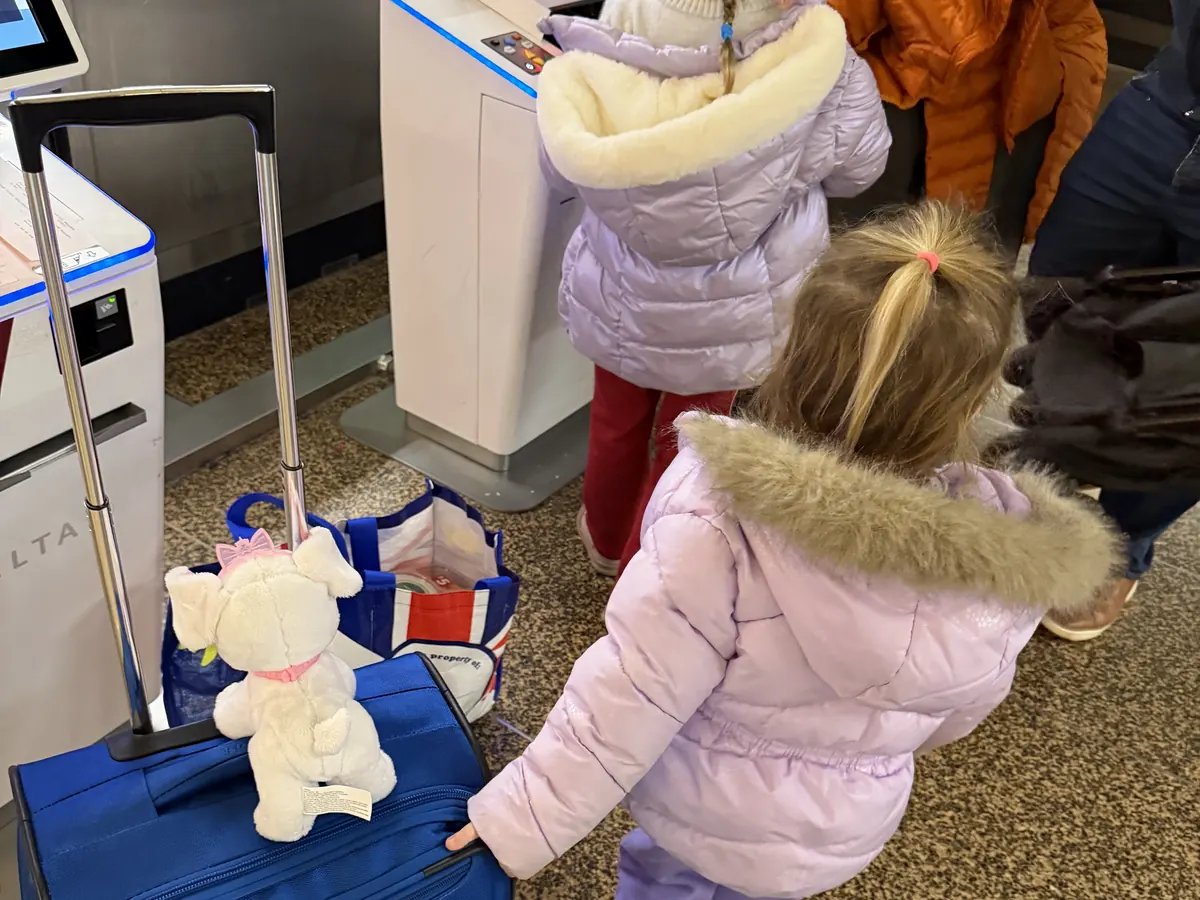
Skip to: The core carry-on · Babies (0 to 1) · Toddlers (1 to 3) · Preschoolers (3 to 5) · Big kids (6+) · Delays and gate-checked bags · What to leave at home · Questions
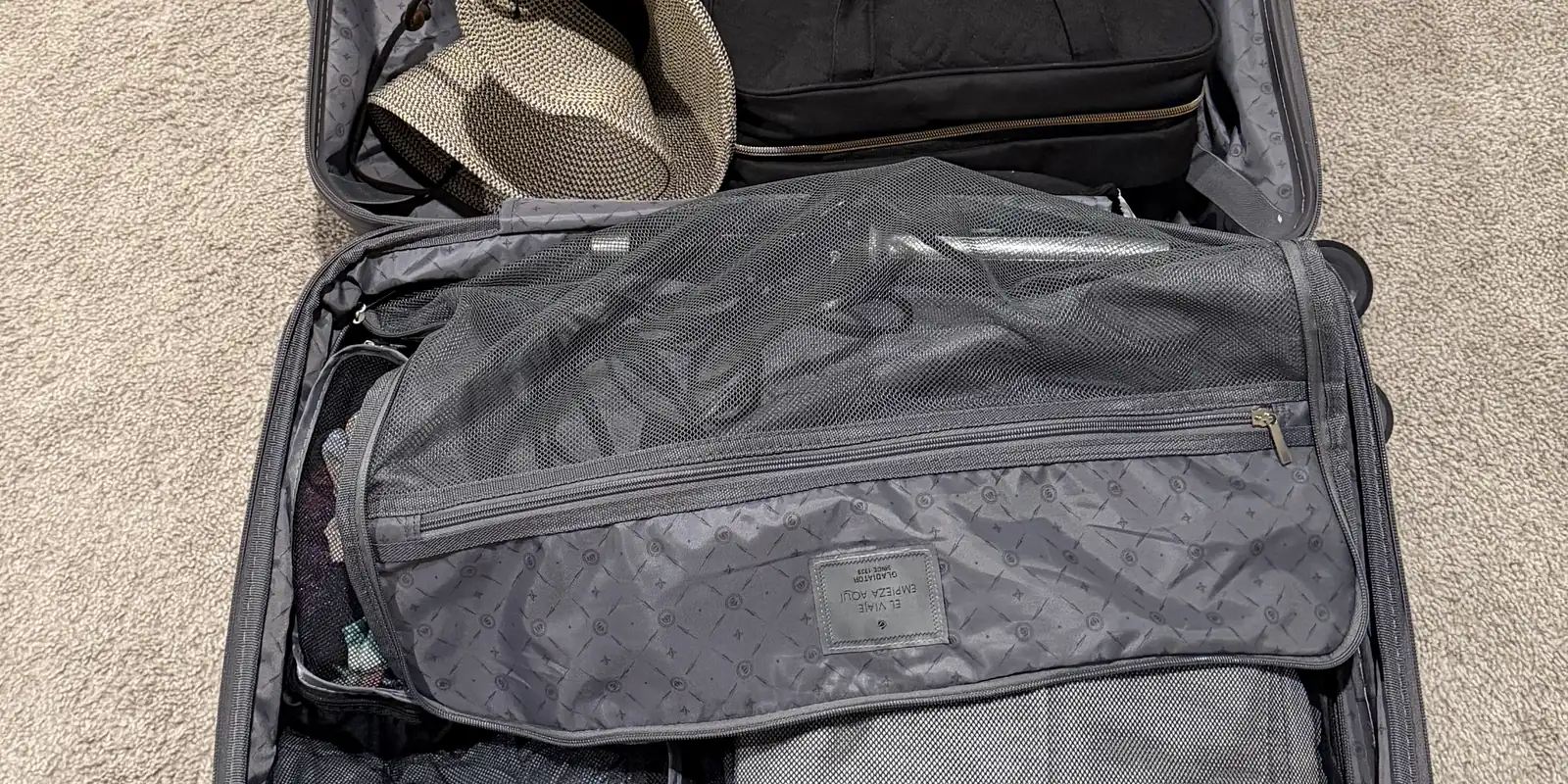
The core carry-on items every family needs
No matter how old your kids are, these go in the parent's bag. If your checked bag ends up somewhere else, this is what gets you through to bedtime.
Documents (keep them all in one pouch)
- IDs and boarding passes for everyone, plus the airline app for gate changes.
- Your kids' birth certificates or copies. Airlines can ask a lap baby's age.
- Insurance cards and a paper copy of your itinerary, in case your phone dies.
- A travel document organizer, one per parent or just one that a parent carries.
Medicine (never put it in the checked bag)
- Prescriptions, in their original packaging.
- Fever reducer, thermometer, bandages, allergy and motion sickness meds.
Clean-up supplies
- A change of clothes for each kid, and a spare top for you.
- Wipes, tissues and hand sanitizer. Bring more wipes than you think.
- Disinfecting wipes for the tray table, armrests and seatbelt.
- Gallon and sandwich zip bags for wet clothes, snacks or a leaky bottle.
Food and water
- Snacks for at least twice the flight time, in case of delays.
- An empty water bottle for each person, to fill after security.
Phones, tablets and chargers
- Phones, chargers and a power bank, since gate outlets are usually taken.
- Tablets with shows downloaded at home, plus kid-sized headphones.
- An airplane Bluetooth adapter, so wireless headphones work with the seatback screen.
For everyone
- A light layer for each person, because planes get cold.
- AirTags in the stroller, car seat and checked bags, so you can see where they are.
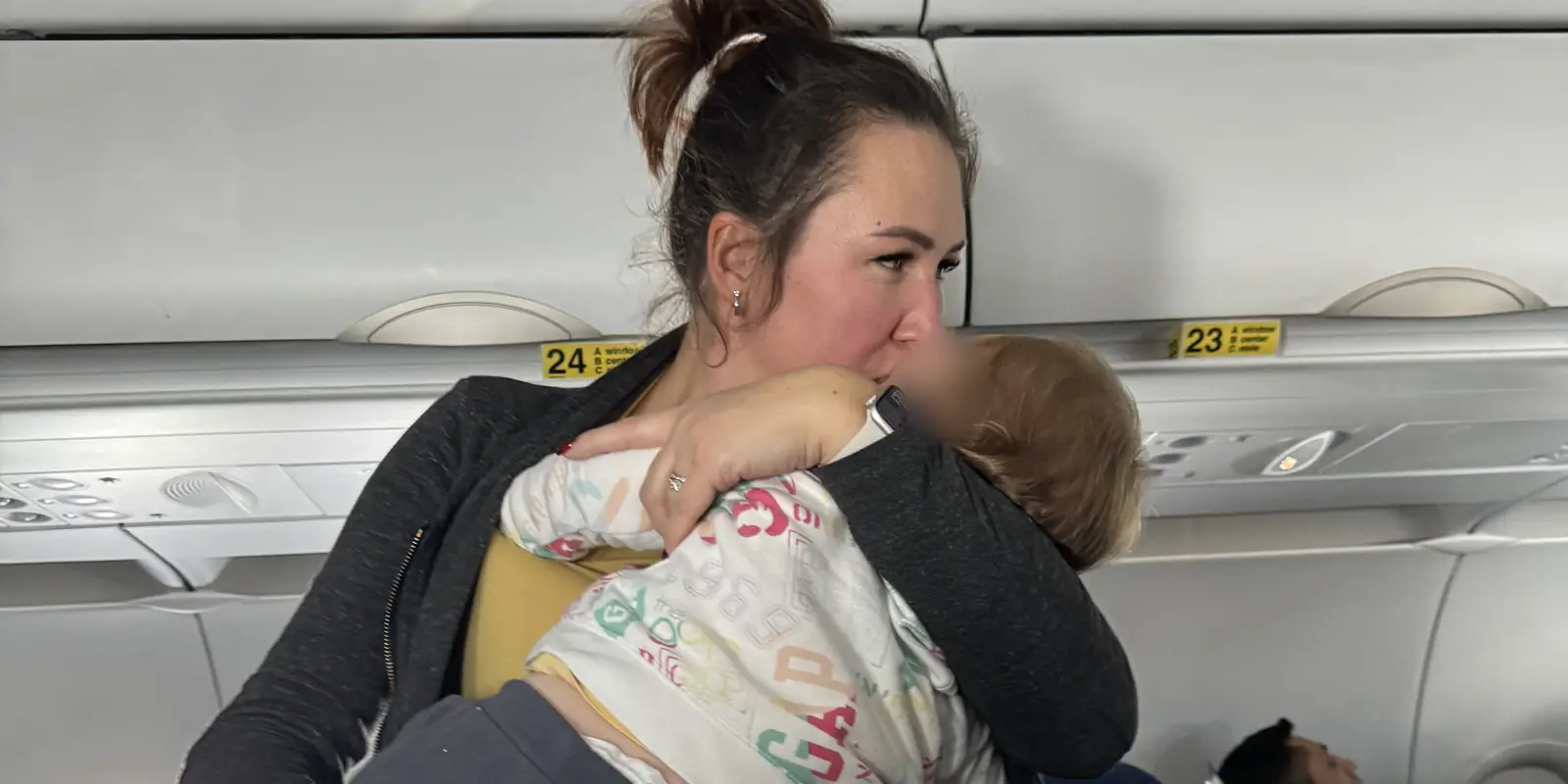
What to pack for babies (0 to 1)
Babies need the most stuff and the least entertainment, so your bag ends up working like a small nursery.
- Diapers: one for every hour of travel, door to door, plus a few extra in case of delays. Putting them in an overnight diaper for the flight means fewer changes in that tiny bathroom.
- Wipes and a fold-up changing pad.
- A blowout kit with two outfits for the baby, a spare top for you, and a wet bag or zip bag to seal everything in.
- Bottles, plus two more feeds than you think you'll need, because a four-hour delay means a lot of feeds. Pre-mixed bottles are easiest at the gate, and powder is lighter to carry as a backup.
- A breast pump and milk storage bags, if you're pumping.
- Burp cloths, bibs and a big muslin. The muslin also works as a nursing cover, a sunshade, a blanket and a floor mat.
- More than one pacifier, and a pacifier clip. You don't want to be searching the plane floor for the only one you brought.
- Their comfort toy or lovey.
- A sleep sack or swaddle and a warm layer. Cabins get cold, and a familiar sleep sack helps them know it's nap time.
- A baby carrier, so your hands are free in the airport and down the aisle. TSA lets you walk through the metal detector wearing it.
- A nasal aspirator and something for teething. A stuffy nose makes ear pressure worse.
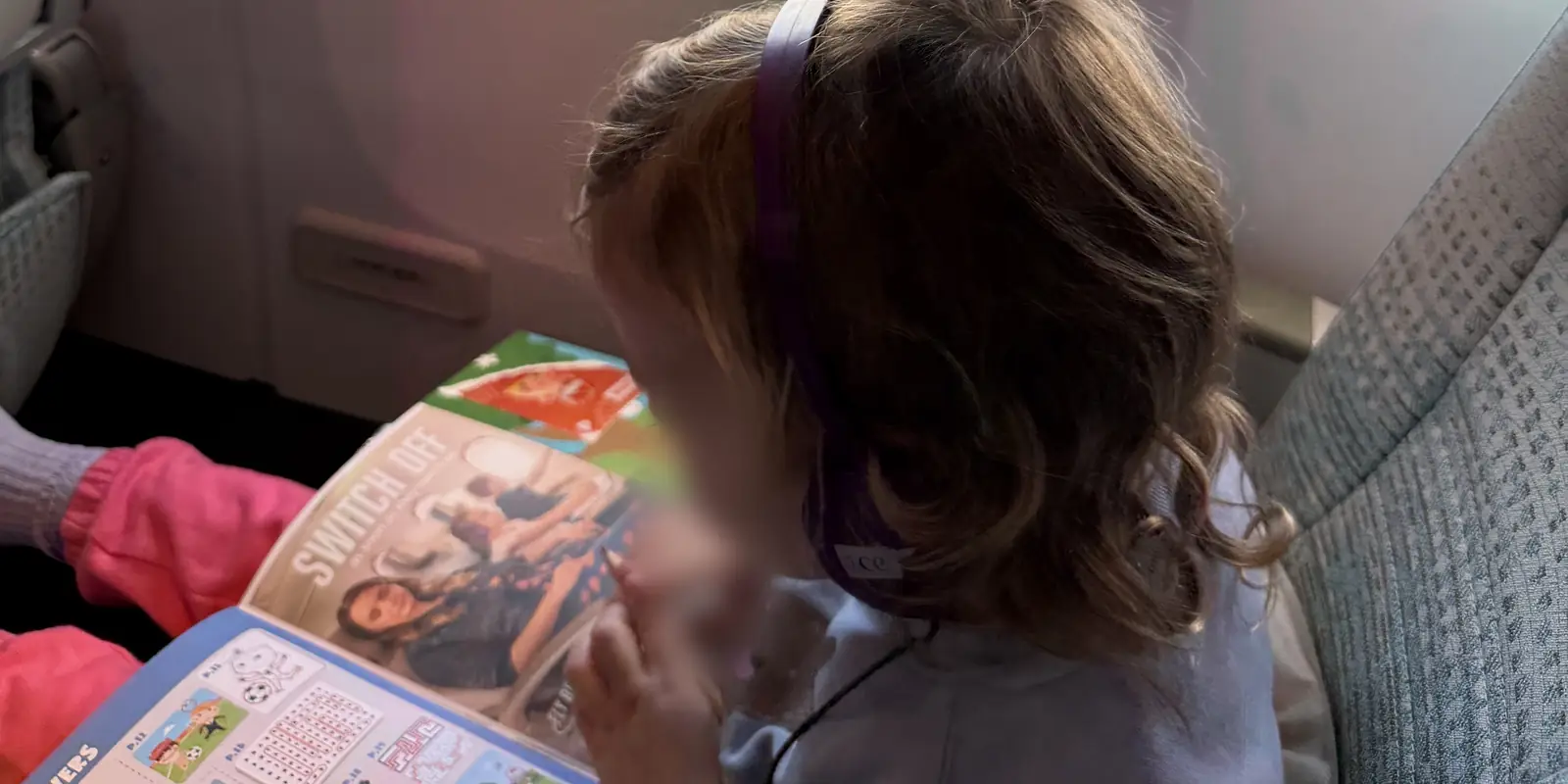
What to pack for toddlers (1 to 3)
Toddlers are the hardest age to fly with, so it's worth packing carefully. They want to move, touch everything and snack the whole time, so plan to hand out entertainment a little at a time.
- Diapers and wipes, or pull-ups even if they're potty trained. When the seatbelt sign is on or the bathroom line is long, a newly trained toddler can't always wait.
- A travel potty seat that fits the plane toilet, if they're still in the middle of potty training.
- A sippy cup and spill-proof snack cups. Snacks that take a while to eat work best, like puffs, crackers, cereal and fruit strips.
- Small toys they haven't seen before, handed out one at a time. Wrapping them buys you a few extra minutes.
- Stickers, water-reveal books and chunky crayons that won't roll under the seat. A roll of painter's tape is a surprise hit too. Stick pieces on the seatback and let them peel them off.
- Leave anything with lots of small pieces at home, or you'll spend the flight on the floor looking for them.
- A tablet with shows downloaded and kid headphones. Download everything before you leave home, because airplane Wi-Fi and streaming apps don't always work.
- Their comfort toy and blanket.
- If your toddler has their own seat, a CARES harness. It's an FAA-approved airplane harness for kids about 22 to 44 lb, so you don't have to carry a car seat on board. Buy it from the manufacturer, since there are fakes sold online.
What to pack for preschoolers (3 to 5)
This is the age when kids love having their own small backpack. Let them carry it, and let them help you pack it.
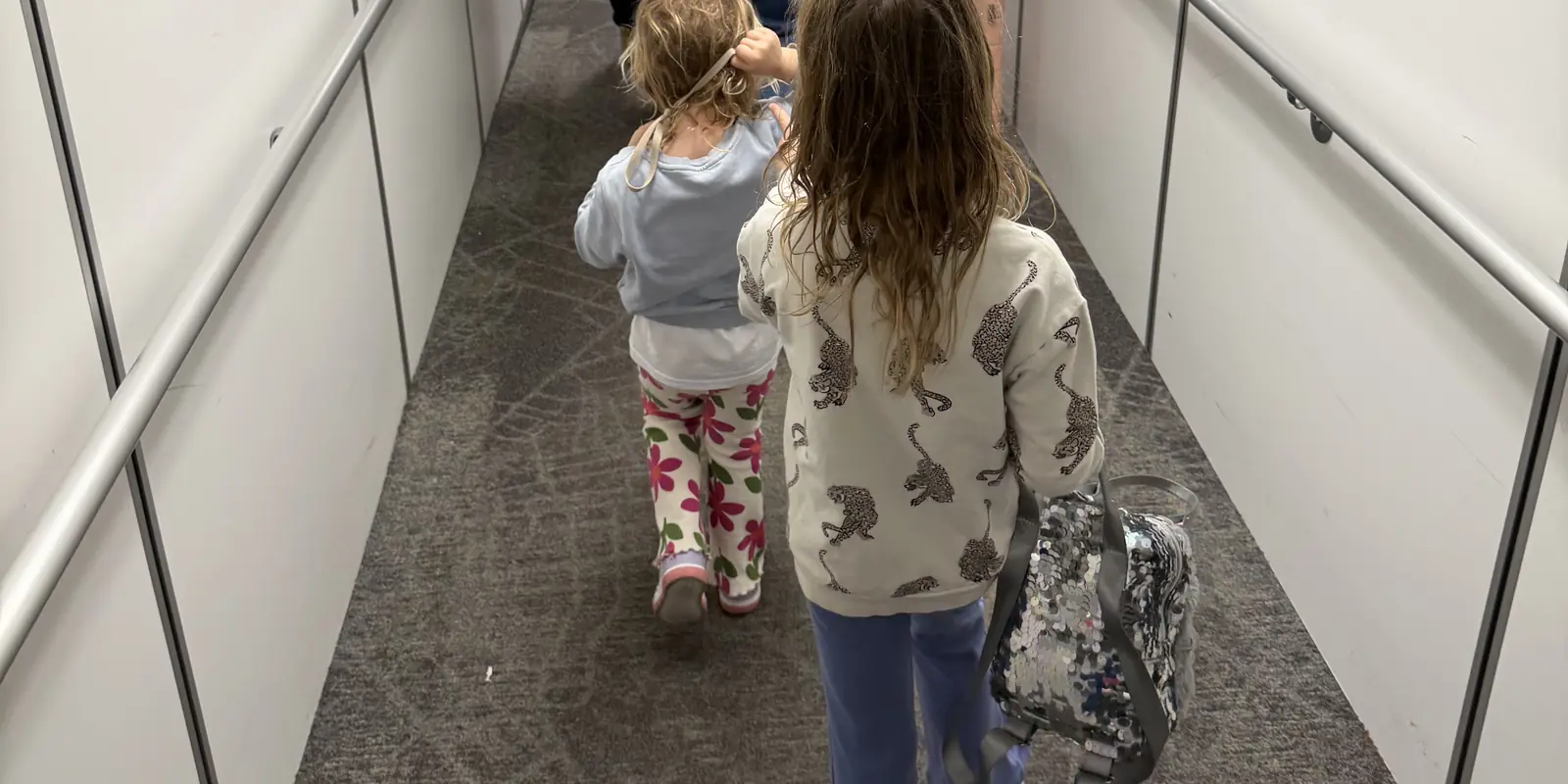
- A kid-sized backpack they can wear down the jet bridge.
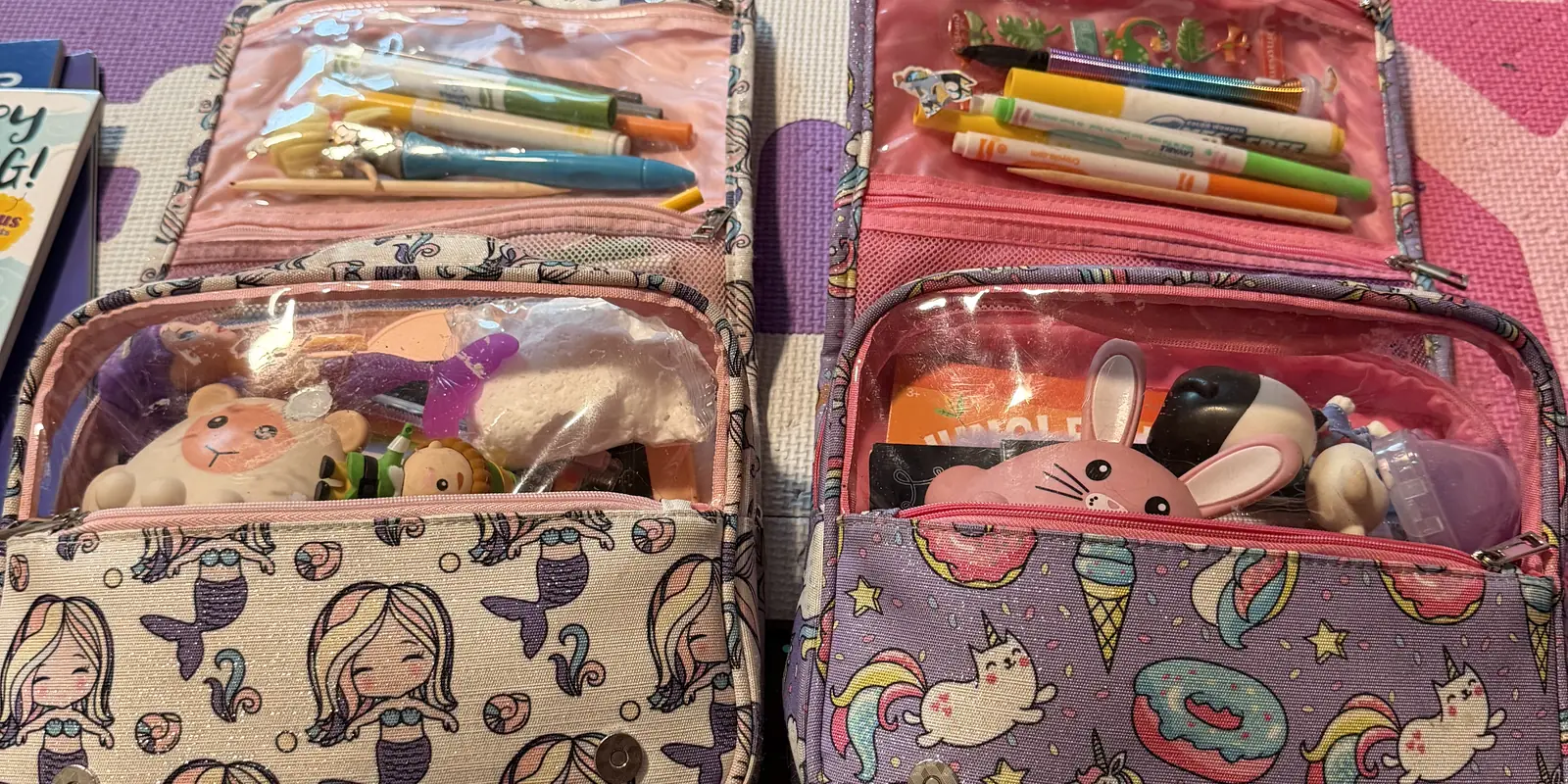
- An activity kit with a sketchpad and crayons, a magnetic drawing board, sticker or wipe-clean activity books, and a travel-size puzzle.
- A tablet and kid headphones, with their favorite shows downloaded.
- Lollipops or chewy candy for takeoff and landing. They help with ear pressure the same way a bottle does for babies.
- Their comfort toy. It still matters, even if they tell you they're too big for it.
- A cozy oversized sweater or hoodie, which can double as a pillow or a blanket.
- A kids' neck pillow for longer flights.
- A nighttime pull-up for red-eyes or long flights, just in case.
- Motion sickness bands, if your kid tends to get queasy.
What big kids (6+) can pack themselves
Big kids can pack their own backpack, and they're usually proud to do it. You just do a final check for liquids, chargers and anything that should go in the documents pouch.
What goes in their backpack
- Headphones, plus a spare wired pair
- A tablet or handheld game, charged, with shows and games downloaded
- A charger and cord with their name on it
- A book or activity book, and a pencil
- A deck of cards or a travel game
- A refillable water bottle, empty when you go through security
- One or two snacks they picked out
- A light layer and socks
- A neck pillow and eye mask for long or overnight flights
- A kid-friendly camera, if they like taking pictures
If your tween has started their period, pack period supplies, a spare pair of underwear and a zip bag in their backpack, just in case.
A spare outfit for big kids can go in your bag instead of theirs. Seatback screens often have games kids can play against each other, so check that before you buy new ones.
Keeping kids comfortable on the plane
A comfortable kid is usually a quieter kid, and these small things help a lot once you're in the air.
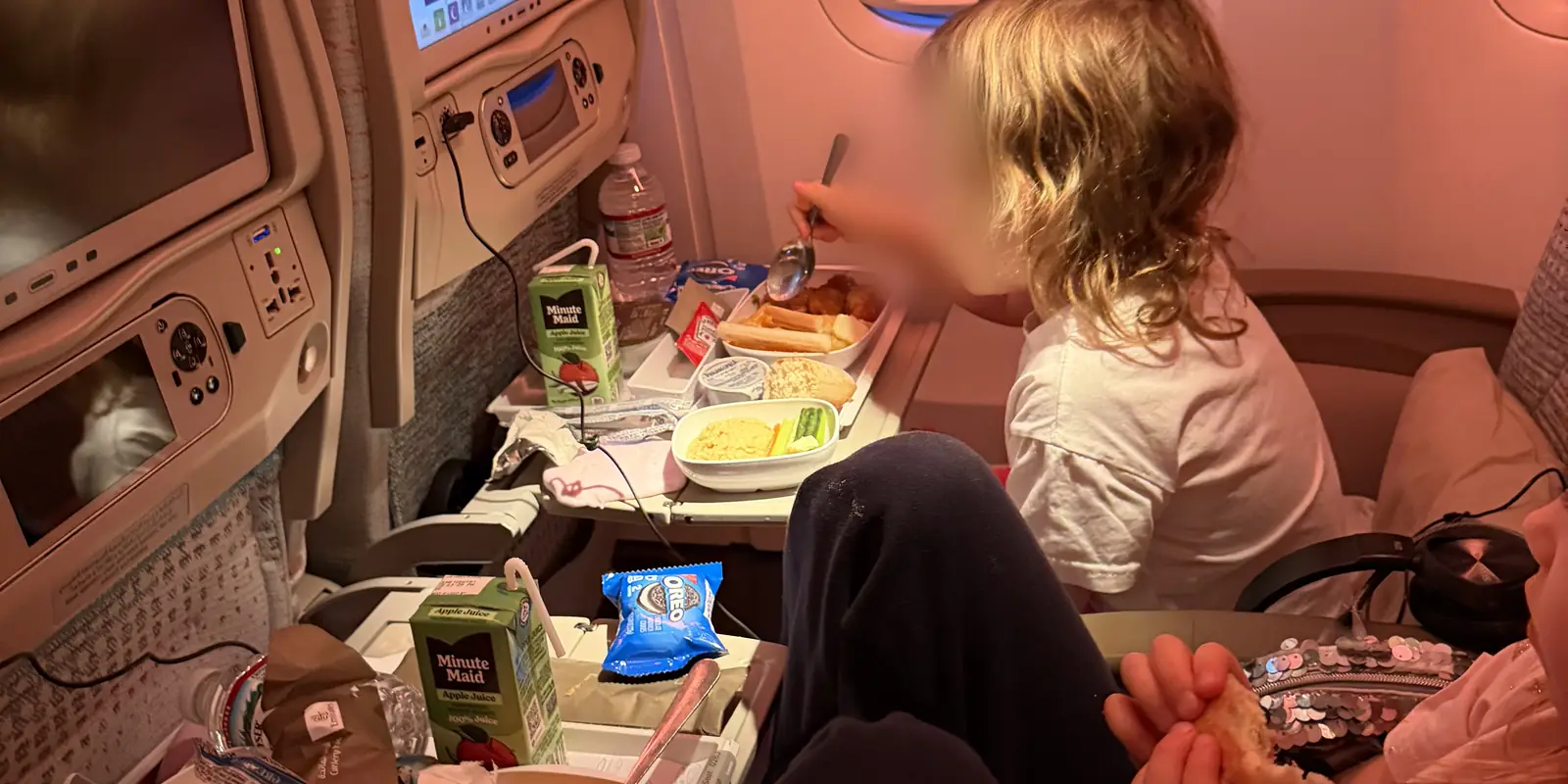
- Bring layers for everyone. Every kid should have a hoodie or zip-up, even if you are flying somewhere warm, because the air vents never stop.
- Pack socks. Shoes come off on the plane, and the floors are cold. If you have a crawling baby, socks over their hands keep them off the floor too.
- Bring pajamas for red-eye flights. Change at the gate and do a short version of your bedtime routine with the same lovey, book and song.
- Use a carry-on as a footrest. Put it under the seat in front of your smallest kid so their legs don't dangle.
- Check your airline's rules before buying an inflatable footrest or seat bed. Some airlines ban them, some only allow them in window seats, and none allow them in exit rows. They always have to be put away for takeoff and landing.
- Keep wipes where you can reach them, not in the overhead bin. You'll need one the moment the seatbelt sign comes on.
Planning for delays and gate-checked bags
It's smart to plan for the travel day not going the way you expect. Parents who've been through it suggest carrying about 24 hours' worth of everything your kids can't do without.
- Assume there will be a delay, and bring extra diapers, feeds and snacks. Running out while you are stuck on the tarmac is much worse than the delay itself.
- Keep anything that's hard to replace in the cabin with you: medicine, glasses, the comfort toy, and one outfit for everyone. One family whose bags were lost for a week said the outfit was the thing they most wished they'd carried on.
- Put an AirTag in every checked bag, the stroller and the car seat. You'll be able to see where your things are and show the airline too.
- Use a padded gate-check bag for the stroller and car seat. Car seats can get damaged when they are checked, so many parents bring the car seat on board if their child has their own seat.
- Check your airline's stroller rules. Most U.S. airlines gate-check a stroller and car seat for free, but size and weight limits vary, and heavy strollers may have to be checked at the ticket counter.
- Make sure you have a free hand for each kid. If something doesn't fit in your carry-on and you can't carry it with a toddler on your hip, check it.
What to leave at home
Every one of those pieces will end up under seat 23C.
Bring the bottles empty and fill them at the gate.
If they can't carry the backpack themselves, it's too heavy.
You can often rent or buy cribs, car seats and even diapers where you land.
Questions parents ask about flying with kids
Plan on one diaper for every hour of travel, door to door, plus a few extra in case of delays.
Yes, even in amounts over 3.4 oz. Tell the TSA officer at the start of screening and take them out of your bag so they can be screened separately.
Kids under 2 can fly on your lap. The FAA recommends giving them their own seat with an approved car seat or harness, because that's the safest place for them if there's turbulence.
Swallowing helps. Babies can nurse or have a bottle or pacifier, and older kids can sip water, chew something or have a lollipop.
Ask your pediatrician before you fly. Some parents find that common sleep or allergy medicines have the opposite effect on their child.
Entertainment, headphones, a snack, an empty water bottle and a layer. You keep the documents, medicine and spare clothes.
Every family's carry-on looks a little different depending on who's flying and for how long. FamJet builds your list around your kids' ages and your trip, so you pack what you need and nothing you don't. You can start a free list before your next flight.